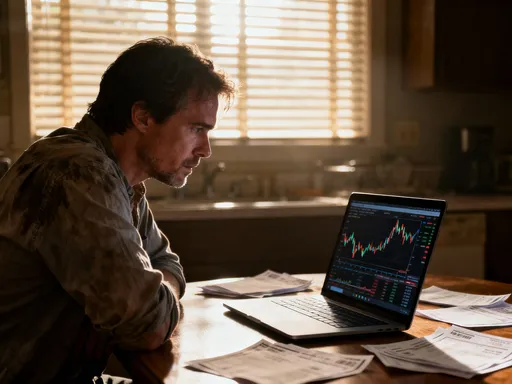
Losing my job was a gut punch. Suddenly, my steady income vanished, and every financial decision felt like walking blindfolded. That’s when I realized: understanding market trends isn’t just for investors—it’s survival when you’re in crisis. I started tracking signals I’d ignored before, tested simple strategies, and slowly rebuilt my safety net. This is how I learned to read the market not to get rich, but to stay afloat. It wasn’t about making bold trades or chasing high returns. Instead, it was about recognizing early signs of economic shifts, protecting what little I had left, and making smarter choices under pressure. In the months that followed, I discovered that financial awareness isn’t reserved for experts—it’s a skill anyone can develop, especially when they need it most.
The email arrived on a Tuesday morning, just after I poured my second cup of coffee. No warning, no meeting, no conversation—just a formal message stating my position was eliminated due to company restructuring. In that moment, everything changed. The paycheck I had counted on for years was gone. The routine I had built around work hours, commutes, and weekend planning suddenly felt meaningless. Panic set in quickly. How would I cover the mortgage? What about health insurance? Could I still afford groceries, let alone save for my child’s education? The emotional toll was overwhelming, but the financial reality was even more pressing.
What surprised me most was how unprepared I felt. I had a savings account, yes, but it wasn’t designed to last more than a few months. I didn’t have a clear picture of my monthly burn rate, nor did I understand how long I could realistically survive without income. Like many people, I had relied on the stability of employment without questioning how fragile that stability truly was. The job market had always seemed distant, something reported on the news rather than something that directly affected my daily life. But now, it was personal. I realized that financial security wasn’t just about earning—it was about awareness, preparation, and the ability to respond when things went wrong.
This crisis forced me to shift my mindset. Instead of seeing myself as a passive recipient of income, I began to think like someone responsible for their own economic resilience. I started asking questions: What signs had I missed? Were there warnings in the economy that I could have seen earlier? Could I have anticipated this? While I couldn’t change what had already happened, I could control how I responded. That’s when I turned my attention to market signals—not to make money, but to avoid losing more than I already had. I began reading economic reports, following job data, and paying attention to interest rate announcements. What I discovered was both surprising and empowering: market trends aren’t just numbers on a screen—they’re reflections of real human behavior, business decisions, and policy shifts that affect everyone, especially those in financial distress.
For years, I assumed that market predictions were only for investors with portfolios, analysts in suits, or people who watched financial news all day. I thought forecasting was about guessing which stock would rise or when to buy Bitcoin. But during unemployment, I learned that market insight isn’t just about wealth creation—it’s about risk management, timing, and survival. Understanding economic trends helped me anticipate how long the job market might remain weak, when certain industries might start hiring again, and whether it was safe to dip into savings or better to cut expenses further.
Economic indicators, often overlooked by everyday people, became essential tools in my recovery plan. For example, the monthly jobs report released by the Bureau of Labor Statistics showed whether employment was growing or shrinking across sectors. When I saw that technology and healthcare were adding jobs while retail and hospitality continued to contract, I adjusted my job search accordingly. Consumer spending data helped me understand whether people were feeling confident enough to spend money—if they weren’t, companies would likely delay hiring. Interest rate decisions by the Federal Reserve signaled whether borrowing would become more expensive, which influenced everything from car loans to credit card payments. These weren’t abstract concepts—they were real-time signals that shaped my decisions.
One of the most valuable lessons I learned was that market trends often move ahead of personal experience. By the time layoffs hit my company, the warning signs had already been visible in broader economic data. Industrial production had been declining for three months. Business investment had slowed. Job openings had started to drop. If I had been paying attention, I might not have been caught off guard. This isn’t about blaming myself—it’s about recognizing that information is power. Even if you’re not an investor, understanding these patterns helps you prepare for disruptions before they reach your doorstep. It allows you to make proactive choices instead of reactive ones, whether that means tightening your budget earlier, accelerating your job search, or delaying a major purchase until conditions improve.
After realizing how much I had missed, I decided to build my own early warning system—one that didn’t require a finance degree or expensive software. The goal wasn’t to predict the future with perfect accuracy, but to stay informed enough to act before a crisis deepened. I started by identifying the most reliable and accessible sources of economic data. The U.S. Department of Labor, the Federal Reserve, and the Census Bureau all publish free reports that anyone can read. I subscribed to email alerts for key releases like the Consumer Price Index, job numbers, and manufacturing activity. These weren’t long documents—I focused on the summary sections, which provided clear takeaways without technical jargon.
Next, I created a simple tracking calendar. Every month, I noted the release dates of major reports and set reminders to review them. I didn’t analyze every number—instead, I looked for trends over time. Was unemployment rising for two months in a row? Was inflation cooling? Was retail sales improving? Consistency mattered more than precision. I also began monitoring news sentiment, not by reading headlines, but by observing how experts interpreted the data. Did multiple analysts agree that the economy was slowing? Was there growing concern about a recession? This helped me distinguish between isolated events and broader shifts.
I also focused on industry-specific indicators. Since I worked in marketing, I paid attention to advertising spending trends, digital platform growth, and corporate earnings in media companies. When I noticed that several major brands were cutting their ad budgets, I took it as a sign that marketing roles might be at risk across the sector. This wasn’t a guarantee, but it was a signal worth noting. I combined this with local data—job postings in my area, commercial real estate vacancies, and small business closures—to get a more complete picture. Over time, this system became a habit, like checking the weather before leaving the house. It didn’t prevent hardship, but it gave me a sense of control during a period when so much felt unpredictable.
When your income stops, the instinct is often to do something—anything—to make money fast. I considered selling investments, taking on debt, or even starting a side business with my savings. But I quickly realized that the most important financial goal wasn’t growth—it was preservation. Every dollar I had left needed to last as long as possible. That meant making conservative choices, even when they felt frustrating or limiting. I paused contributions to retirement accounts. I stopped investing in mutual funds. I avoided checking stock prices daily, knowing that market volatility could trigger emotional decisions.
I reviewed my asset allocation with a focus on stability. I moved a portion of my savings into high-yield savings accounts and short-term certificates of deposit, which offered modest returns but minimal risk. I held onto dividend-paying stocks not for growth, but because they provided a small, steady income stream. I avoided speculative assets like cryptocurrencies or individual tech stocks, which could lose value quickly during uncertainty. This wasn’t about maximizing returns—it was about ensuring that my money would still be there when I needed it most.
I also redefined my emergency fund. Instead of thinking of it as a fixed amount, I treated it as a timeline. Based on my monthly expenses, I calculated how many months of coverage I had. I set strict rules for withdrawals—only for essential costs like housing, utilities, food, and healthcare. I resisted the urge to use it for non-essentials, even small ones, knowing that each dollar spent was one less dollar available later. At the same time, I reduced my spending wherever possible. I renegotiated bills, canceled subscriptions, and switched to generic brands. These changes weren’t dramatic, but they added up. The goal wasn’t comfort—it was sustainability. By focusing on risk control, I extended my financial runway and gave myself more time to find a new job without desperation.
Knowledge is only useful if it leads to action. As I gathered more information, I began to make deliberate choices based on market conditions. For example, when inflation peaked and grocery prices soared, I delayed replacing my car, knowing that vehicle costs were also inflated. Six months later, when used car prices dropped due to rising interest rates, I was able to buy a reliable model at a much better value. Similarly, when I saw signs of growth in the healthcare technology sector—increased funding, new product launches, rising job postings—I invested time in learning relevant skills through free online courses. This wasn’t about becoming an expert overnight, but about positioning myself for opportunities before they became obvious to everyone else.
I also adjusted my job search strategy based on economic trends. When I noticed that remote work adoption was slowing and companies were calling employees back to offices, I prioritized roles that offered flexibility. When certain regions showed stronger job growth, I considered relocation options. I didn’t act on every signal, but I used them to refine my decisions. One of the most impactful moves was timing my resume submissions around earnings seasons. Companies that had just reported strong results were more likely to be expanding and hiring. Applying during those windows increased my chances of getting a response. These weren’t guaranteed outcomes, but they improved my odds.
Another key decision was when to say no. When friends invited me to join a group investment in a new startup, I declined—not because the idea was bad, but because the timing was wrong. Market sentiment was uncertain, interest rates were rising, and venture capital funding was tightening. I knew that early-stage companies would face more challenges in that environment. Protecting my capital was more important than chasing a potential win. This discipline paid off. While some of those ventures struggled, I preserved my resources for essentials. Over time, I learned that smart financial behavior isn’t always about doing more—it’s about doing the right thing at the right time.
There’s no shortage of financial tools, apps, and platforms promising to help you understand the market. But during unemployment, I learned that simplicity is more valuable than sophistication. I didn’t need complex algorithms or premium subscriptions—I needed clear, reliable information without distractions. I relied on free, reputable sources like the Federal Reserve’s website, the Bureau of Economic Analysis, and major news outlets with strong economics reporting. I used basic charting tools to visualize trends in unemployment, inflation, and consumer spending. These weren’t flashy, but they were effective.
I avoided tools that made bold predictions or used AI to generate market forecasts. Many of these platforms rely on historical data that doesn’t account for sudden shocks, and their recommendations can be misleading. Instead, I focused on data aggregation—sites that compiled key indicators in one place, with explanations of what they meant. I appreciated platforms that offered calendar views of upcoming economic releases, so I could plan my reviews in advance. Mobile notifications helped me stay on track without constant monitoring.
I also learned to filter out noise. Social media, while useful for networking, was often filled with speculation, fear-mongering, and hype. I limited my exposure to financial forums and avoided viral posts about market crashes or sudden booms. Instead, I followed a few trusted economists and journalists who provided balanced, evidence-based analysis. I read their summaries, compared their views, and formed my own conclusions. The goal wasn’t to find a single truth, but to build a well-rounded perspective. Over time, I developed a lean information toolkit—simple, reliable, and sustainable. It didn’t require hours of daily research, just consistent, focused attention.
Markets are driven by emotions—fear and greed, optimism and panic. And when you’re unemployed, those emotions can feel overwhelming. It’s easy to fall into the trap of checking your portfolio every hour, reacting to every headline, or making impulsive decisions based on short-term noise. I experienced this firsthand. There were days when a positive jobs report made me feel hopeful, and others when a stock market dip made me anxious about my savings. I realized that emotional discipline was just as important as financial knowledge.
To stay grounded, I established routines. I set specific times to review economic data—once a week, not every day. I created decision rules in advance, such as “I will not sell investments unless I need the money for essential expenses” or “I will not take on debt for non-essentials.” These rules helped me avoid acting on impulse. I also practiced mindfulness, taking time to reflect on my financial goals and progress. I reminded myself that recovery takes time, and that short-term fluctuations didn’t define my long-term outcome.
I focused on what I could control: my budget, my job applications, my skill development. I stopped comparing myself to others who seemed to be doing better. Instead, I celebrated small wins—completing a course, getting an interview, reducing a bill. This mindset shift didn’t eliminate stress, but it reduced its power over my decisions. I learned that financial resilience isn’t about speed—it’s about consistency, patience, and emotional balance. By staying grounded, I avoided costly mistakes and maintained a clear path forward.
Unemployment didn’t just take my job—it gave me a new perspective on money, risk, and personal responsibility. I entered that period feeling powerless, but I emerged with a deeper understanding of how the economy works and how to navigate it with greater confidence. I didn’t become a market expert, but I learned to read signals, protect my resources, and make informed choices under pressure. The real lesson wasn’t about predicting the future—it was about building the ability to respond wisely when life changes unexpectedly.
Financial awareness isn’t just for investors. It’s a survival skill for anyone facing uncertainty. Whether you’re dealing with job loss, medical bills, or unexpected expenses, understanding market trends can help you make better decisions, avoid panic, and extend your financial runway. It’s not about getting rich or beating the market. It’s about staying afloat, protecting your family, and maintaining peace of mind. The tools are accessible, the knowledge is within reach, and the benefits are real. The next time a crisis comes—and it will—being prepared isn’t just an advantage. It’s the difference between sinking and swimming.

By Sophia Lewis/Dec 7, 2025

By Christopher Harris/Dec 7, 2025

By Samuel Cooper/Dec 7, 2025

By Thomas Roberts/Dec 7, 2025

By Christopher Harris/Dec 7, 2025

By Eric Ward/Dec 7, 2025

By Elizabeth Taylor/Dec 7, 2025

By Ryan Martin/Dec 7, 2025

By Benjamin Evans/Dec 7, 2025

By Noah Bell/Dec 7, 2025

By Daniel Scott/Dec 7, 2025

By Thomas Roberts/Dec 7, 2025
By Sophia Lewis/Dec 7, 2025

By Joshua Howard/Dec 7, 2025

By Rebecca Stewart/Dec 7, 2025

By Noah Bell/Dec 7, 2025

By Daniel Scott/Dec 7, 2025

By James Moore/Dec 7, 2025

By Joshua Howard/Dec 7, 2025

By Olivia Reed/Dec 7, 2025
