Ever wandered a place where every cobblestone whispers history, but the real magic hides in tiny workshops tucked behind pastel walls? Sintra isn’t just palaces and crowds—it’s hand-stitched leather, family-run boutiques, and artisans shaping soul into souvenirs. I went searching for something real beneath the tourist glow and found a side of Portuguese craft most never see. This is shopping not as commerce, but as connection. It’s the quiet hum of a sewing machine in a backroom studio, the scent of beeswax on polished wood, the glance exchanged between visitor and maker that says, without words, ‘You understand this matters.’ In a world of fast travel and faster purchases, Sintra offers a slower rhythm—one where beauty is made by hand and meaning is woven into every thread.
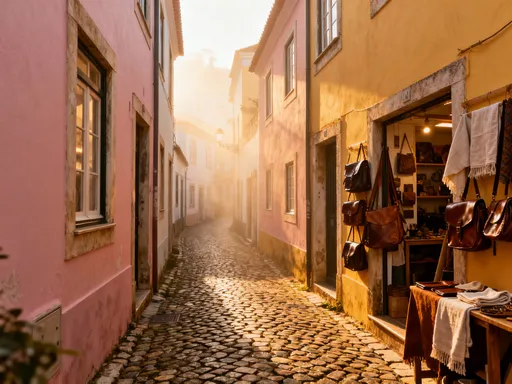
Sintra is often framed by its crown jewels: the candy-colored Pena Palace perched above the fog, the stately Moorish Castle ruins winding up the hillside, and the manicured gardens of Quinta da Regaleira drawing visitors from across the globe. These landmarks are undeniably breathtaking, yet they represent only one layer of a town that pulses with quieter, deeper life. Just beyond the main promenades and ticketed entrances lies a network of narrow, winding streets where history isn’t just preserved—it’s lived. Here, laundry flutters between balconies painted in ochre and seafoam green, cats nap in sunlit doorways, and the sound of a chisel tapping stone or a needle pulling thread drifts from open workshop windows.
This is the Sintra that unfolds not in guidebooks, but in moments of chance discovery. It’s a town where centuries of cultural blending—Moorish, Gothic, Manueline, Romantic—have not only shaped architecture but also nurtured a tradition of meticulous craftsmanship. While tourists climb the hill to snap photos at panoramic viewpoints, locals keep time-honored trades alive in family-run ateliers that have operated for generations. These spaces are not curated for display; they are working studios where art meets daily life, and where visitors who wander with intention can witness creation in real time.
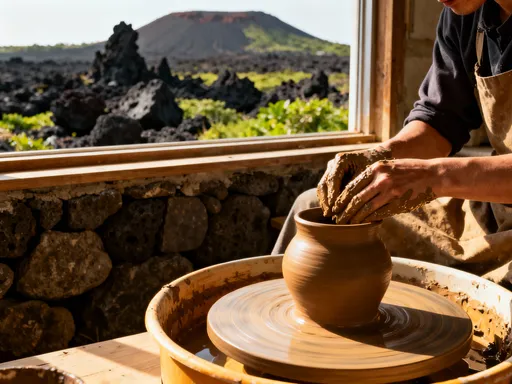
What makes this hidden Sintra so compelling is its authenticity. Unlike the polished boutiques in major European capitals, these small enterprises thrive on personal touch and local pride. There are no flashy signs or aggressive marketing—just the quiet confidence of someone who knows their work speaks for itself. Whether it’s a ceramicist shaping clay with hands stained from years of glaze or a bookbinder repairing antique volumes with delicate precision, the rhythm of creation here feels unhurried, intentional, and deeply rooted in place. This is not performance for tourists; it is a way of life that happens to be visible to those who look closely.
Exploring this side of Sintra requires a shift in mindset. It means trading checklists for curiosity, speed for stillness. It means allowing yourself to get lost in the maze of alleys behind the train station, where every turn reveals another unassuming doorway marked with a simple hand-painted sign: ‘Artesanato,’ ‘Cerâmica,’ ‘Sabores Locais.’ These are not destinations you can rush to. They are invitations to pause, to observe, and to connect—not just with objects, but with the people who make them and the stories they carry.
In recent years, a quiet revolution has been reshaping the way people travel. No longer satisfied with ticking off landmarks or filling suitcases with mass-produced souvenirs, more travelers are seeking experiences that feel meaningful, personal, and sustainable. This shift has given rise to what many now call ‘slow shopping’—a mindful approach to purchasing that values quality, origin, and emotional resonance over convenience and cost. In places like Sintra, where craftsmanship is still a living tradition, this philosophy finds its natural home.
At its core, slow shopping is about intention. It’s the difference between buying a keychain stamped with a generic symbol of Portugal and choosing a small leather pouch stitched by hand in a family workshop. The latter isn’t just an object; it’s a vessel of memory, a tangible link to a moment of human connection. When travelers choose handmade goods, they participate in a cycle of cultural preservation. Each purchase supports local artisans, helps sustain traditional techniques, and ensures that these skills are passed on to future generations. In a world where industrialization has erased so many regional crafts, this support is not just symbolic—it’s essential.
Studies in cultural tourism confirm this growing trend. According to recent data from the European Travel Commission, over 60% of leisure travelers now prioritize authentic local experiences, with nearly half expressing a preference for buying souvenirs directly from artisans. These travelers aren’t looking for luxury or status; they want items that tell a story. They value transparency—knowing where something was made, who made it, and how. This desire for authenticity reflects a broader cultural shift toward conscious consumption, where people increasingly seek alignment between their values and their spending.
Moreover, the emotional impact of such purchases cannot be overstated. A handcrafted item carries with it a sense of presence—the memory of standing in a sunlit studio, watching an artisan shape molten glass into a delicate vase, or feeling the weight of a hand-thrown ceramic bowl that fits perfectly in your palm. These objects become anchors of travel, not because of their monetary value, but because of the moments they represent. They remind us not just of where we’ve been, but of how we felt—seen, engaged, and part of something real.
Slow shopping also fosters a deeper relationship with place. When you buy from a local maker, you’re not just acquiring a product; you’re engaging with a community’s identity. In Sintra, this identity is shaped by centuries of artistic expression, from the intricate tilework of azulejos to the delicate embroidery of traditional linens. By choosing to support these crafts, travelers become temporary stewards of cultural heritage, helping to keep traditions alive in an era of globalization.
To experience Sintra’s craft culture firsthand, one must step off the main tourist routes and into its lesser-known neighborhoods. The journey begins just a short walk from the historic center, where the pace slows and the architecture softens. Along Rua da Pena and the side streets branching toward Tapada Nacional, small ateliers and family-run shops line the cobblestone paths, often marked only by unassuming wooden signs or baskets of goods displayed in the window. These are not hidden in secrecy, but in plain sight—easily missed by those who don’t pause to look.
One of the most rewarding areas to explore is the cluster of workshops near the edge of the national park. Here, ceramicists work with local clay, shaping plates, mugs, and decorative tiles using techniques passed down through generations. The scent of kiln-fired earth lingers in the air, mingling with the aroma of eucalyptus from the surrounding forest. In one such studio, visitors can watch as artisans hand-paint floral motifs inspired by Sintra’s lush gardens, using cobalt blue and soft ochre pigments that echo the town’s historic color palette. Many of these studios welcome guests to browse, ask questions, and even participate in short workshops, offering a rare chance to learn directly from the makers.
Another highlight is the growing number of perfume and apothecary studios that draw inspiration from Sintra’s rich botanical heritage. Long known for its microclimate and abundance of aromatic plants—jasmine, lavender, rosemary—this region has a quiet tradition of natural scent-making. In a small atelier tucked behind a ivy-covered wall, one can find hand-blended essential oils, solid perfumes in reusable tins, and linen sprays infused with local herbs. The process is slow and meticulous: flowers are often harvested at dawn, distilled in small batches, and blended according to seasonal availability. These fragrances capture not just a scent, but a moment in time—a summer morning in the hills, a breeze through the cypress trees.
Textile artisans also thrive in this creative ecosystem. In a modest shop near São Pedro, a third-generation seamstress transforms locally sourced linen into aprons, napkins, and tea towels, each edged with hand-embroidered detailing. The patterns—geometric, floral, or inspired by traditional Portuguese folk designs—are stitched with care, often taking hours for a single piece. Customers are invited to sit at a small table with samples, feeling the texture of the fabric and choosing their preferred design. There is no pressure to buy; the experience itself is part of the offering.
Leathercraft, too, holds a special place in Sintra’s artisan landscape. In a compact workshop just off Rua do Paço, vegetable-tanned leather is shaped into wallets, journals, and small travel bags using tools that have changed little over decades. The scent of natural tannins and beeswax fills the room, and the artisan often works at a wooden bench visible from the street, allowing passersby to observe the precision of each cut and stitch. These pieces are built to last, designed not for fleeting fashion but for daily use and gradual aging—a philosophy that resonates deeply with travelers seeking sustainability.
Behind every handcrafted item in Sintra is a story of dedication, skill, and heritage. While the names of individual artisans may not be widely known outside their communities, their work speaks volumes about the values that sustain them. These are not factory workers producing under pressure, but custodians of tradition who take pride in the details. Their craft is not a job; it is a vocation shaped by family, history, and a deep connection to place.
Take, for example, the art of vegetable-tanned leatherwork. Unlike industrial methods that rely on chemicals and speed, this process uses natural tannins derived from tree bark, resulting in leather that ages gracefully over time. The artisans who practice this craft often source materials from nearby regions, ensuring both quality and environmental responsibility. Each piece is cut, stitched, and finished by hand, with attention to durability and function. A simple leather notebook cover, for instance, may take several hours to complete, with every edge burnished and every stitch reinforced. The result is not just a product, but a companion—one that develops a unique patina with use, telling its own story alongside its owner.
Similarly, hand-embroidered textiles represent a quiet act of preservation. In a culture where mass-produced fabrics dominate global markets, the continuation of hand-stitching is a radical act of care. The patterns used in Sintra often draw from regional motifs—interlocking vines, stylized flowers, or geometric borders reminiscent of Moorish design. Each stitch is deliberate, sometimes taking days to complete a single apron or table runner. The women who practice this craft often learned from their mothers or grandmothers, and many speak of it as a form of meditation, a way to slow down and honor the past while creating something useful for the present.
Azulejo-inspired homewares offer another bridge between history and contemporary life. While the iconic blue-and-white tiles adorn palaces and churches throughout Portugal, modern artisans are reinterpreting this tradition in functional objects—ceramic trays, coasters, and wall art. These pieces maintain the essence of the original craft while adapting to today’s homes. The process remains labor-intensive: each tile is hand-painted, fired, and glazed, with slight variations that celebrate imperfection. When travelers purchase such an item, they are not just buying decoration; they are bringing home a fragment of Portuguese identity, one that has endured for centuries.
What unites these makers is a shared humility and pride. They do not seek fame or viral attention. Many express gratitude simply for having customers who appreciate their work. As one ceramicist put it, in words echoed by others, ‘It’s not about selling more. It’s about knowing someone will use this every day, that it will become part of their life.’ This sentiment—quiet, heartfelt, and deeply human—lies at the heart of Sintra’s craft culture.
To fully appreciate Sintra’s artisan culture, timing is key. While the town’s workshops remain open year-round, certain times of year offer unique opportunities to engage with local creativity in its most vibrant form. Monthly artisan fairs and seasonal pop-up markets transform quiet plazas into lively gatherings of makers, musicians, and visitors, creating a festive yet intimate atmosphere that showcases the best of regional craftsmanship.
One of the most anticipated events is the autumn craft market held near São Pedro Church. Taking place over a weekend in late October, this fair brings together over fifty local artisans, offering everything from hand-dyed wool scarves to ceramic candle holders and organic herbal teas. The market is held outdoors, with wooden stalls arranged beneath the shade of ancient trees, and the air carries the scent of roasted chestnuts and spiced wine. Unlike commercial festivals, this event emphasizes authenticity—vendors are required to produce their goods locally, and many demonstrate their techniques on-site, inviting visitors to watch or even try their hand at simple tasks like stamping fabric or shaping clay.
Spring brings its own celebrations, particularly those centered around traditional dye techniques. In April and May, several workshops host open-house weekends where natural dyes made from onion skins, indigo, and tree bark are used to color linen and cotton fabrics. These events often include short talks on the history of textile dyeing in Portugal, as well as hands-on sessions where participants can create their own small dyed pieces to take home. The timing is no accident—spring is when plants are most abundant, and the longer daylight hours allow for extended work in natural light.
Summer, though busier with tourists, also holds special moments. On select Fridays in July and August, a night market unfolds in the historic center, where artisans stay open past sunset, illuminated by lanterns and string lights. The atmosphere is relaxed and convivial, with live acoustic music and local food vendors offering grilled sardines, fresh bread, and seasonal fruit. It’s a rare chance to experience Sintra’s creative community in a more social, celebratory context—one that feels inclusive rather than performative.
For travelers planning a visit, aligning with these seasonal rhythms can significantly enhance the experience. Not only are the markets rich in unique, limited-edition items, but they also offer deeper interaction with makers. Crowds are generally manageable, especially in the morning hours, and the pace allows for genuine conversation. These events are not just shopping opportunities; they are cultural gatherings that reflect the heartbeat of the community.
In a world of endless choices, selecting a souvenir that truly matters requires reflection. The goal is not to collect, but to curate—to choose one or two items that resonate on a personal level. This begins with observation. When entering a workshop or market stall, take a moment to look closely. Feel the weight of a ceramic mug, examine the stitching on a leather bag, or inhale the scent of a hand-poured candle. Let your senses guide you, not just your wallet.
Quality should always take precedence over quantity. A single, well-made piece will outlast a dozen cheap trinkets and carry far more emotional weight. Look for signs of craftsmanship: even stitching, smooth finishes, natural materials. Ask simple, respectful questions—‘Is this made here?’ ‘What kind of leather do you use?’ ‘How long does it take to make?’ These inquiries are not interrogations; they are acknowledgments of the work involved. Most artisans appreciate the interest and are happy to share a bit about their process.
Equally important is the story behind the object. Does it reflect a tradition? Was it made using sustainable methods? Does it serve a purpose in your daily life? A linen apron from Sintra, for instance, is more than a kitchen accessory—it’s a connection to local textile heritage, a reminder of the hands that stitched it, and a practical companion in your own home. Choosing such an item transforms shopping from consumption into curation.
Finally, consider the ethics of your purchase. Support businesses that treat their workers fairly, use eco-friendly materials, and contribute to their communities. In Sintra, many artisans operate on a small scale, so even a modest purchase can make a meaningful difference. By choosing thoughtfully, travelers help ensure that these traditions continue—not as relics of the past, but as living, evolving practices.
When the journey ends and the suitcase is unpacked, the true measure of travel reveals itself not in photos or souvenirs, but in transformation. The most enduring souvenirs are not those that sit on a shelf, but those that are used, worn, and lived with—the leather journal that holds your thoughts, the embroidered napkin that graces your table, the ceramic bowl that becomes your favorite for morning fruit. These objects, born of skill and intention, become silent witnesses to your daily life, carrying the spirit of Sintra into your home.
This is the essence of mindful travel: the understanding that richness is not found in accumulation, but in appreciation. It is in the moment you pause to watch an artisan at work, in the smile exchanged over a shared love of craft, in the decision to choose one meaningful object over ten forgettable ones. Sintra, with its hidden workshops and quiet lanes, offers a powerful reminder that beauty and meaning often lie off the beaten path, waiting not to be conquered, but to be discovered.
As travelers, we have the power to shape the places we visit. By supporting local artisans, we help preserve cultures, sustain livelihoods, and protect traditions that might otherwise fade. We become part of a larger story—one of connection, continuity, and care. And in return, we carry home not just objects, but memories imbued with purpose.
So the next time you walk through a town like Sintra, let your curiosity lead you beyond the postcard views. Step into the small studios, breathe in the scents of creation, and allow yourself to be moved by the quiet dignity of handmade things. For in these moments, we don’t just see the world more deeply—we become more deeply part of it.

By Rebecca Stewart/Dec 7, 2025

By Lily Simpson/Dec 7, 2025

By Grace Cox/Dec 7, 2025
By James Moore/Dec 7, 2025

By Sarah Davis/Dec 7, 2025
By Benjamin Evans/Dec 7, 2025

By Benjamin Evans/Dec 7, 2025

By Ryan Martin/Dec 7, 2025

By Victoria Gonzalez/Dec 7, 2025

By Jessica Lee/Dec 7, 2025
By Eric Ward/Dec 7, 2025
By Daniel Scott/Dec 7, 2025

By Jessica Lee/Dec 7, 2025

By Emily Johnson/Dec 7, 2025

By Sophia Lewis/Dec 7, 2025

By Christopher Harris/Dec 7, 2025

By Benjamin Evans/Dec 7, 2025
By Laura Wilson/Dec 7, 2025

By Olivia Reed/Dec 7, 2025
By Natalie Campbell/Dec 7, 2025
