Nestled in the heart of Europe, Bern reveals more than just clock towers and alpine charm—its surrounding landscape is a geological masterpiece. I never expected such dramatic cliffs, glacial valleys, and emerald rivers just beyond the city’s quiet streets. This isn’t just a trip—it’s a visual journey through nature’s raw artistry. If you’re chasing authenticity and awe, Bern’s unique terrain will redefine your idea of Swiss beauty. Beyond the polished postcards of chocolate-box villages and snow-capped peaks lies a quieter, more profound story: one of time, tectonic forces, and water’s patient hand carving something extraordinary. For the thoughtful traveler, especially those who value both serenity and discovery, Bern offers a rare harmony between urban grace and untamed natural wonder.
Bern, the capital of Switzerland, is often celebrated for its medieval architecture, UNESCO World Heritage status, and unhurried elegance. Yet, just beyond the cobbled lanes and sandstone arcades, a different kind of beauty unfolds—one shaped not by human hands, but by millennia of natural forces. The city itself is cradled by the Aare River, which slices through the plateau with such force that it has created one of the most striking urban-natural interfaces in the Alps. While tourists admire the Zytglogge clock tower, few realize they are standing at the edge of a geological marvel. The river’s deep gorge, carved over hundreds of thousands of years, plunges more than 50 meters below the city, forming a natural amphitheater of limestone and pine-covered cliffs.
What sets Bern apart from other Swiss destinations is this seamless blend of cultivated city life and wild terrain. Unlike the high-altitude resorts of Zermatt or St. Moritz, which focus on vertical ascents and ski culture, Bern offers a more intimate connection with the earth’s history. The surrounding countryside is a mosaic of folded rock, ancient moraines, and river-carved canyons, many of which remain lightly visited. This duality—urban refinement meeting raw nature—makes Bern an ideal destination for travelers who appreciate both comfort and exploration. The landscape here doesn’t shout; it whispers, inviting closer inspection. Whether viewed from a park bench or a high alpine trail, the terrain tells a story of resilience, transformation, and quiet majesty.
The Aare River is not merely a scenic backdrop—it is the architect of Bern’s landscape. Originating in the Oberaargletscher in the Bernese Alps, this powerful waterway travels over 290 kilometers before joining the Rhine, but its most dramatic work is visible just upstream and downstream of the capital. Over the past 500,000 years, the river has relentlessly cut through layers of limestone and sandstone, creating a meandering gorge that encircles the old town like a natural moat. The force of the water, especially during spring melt, is awe-inspiring, with currents reaching speeds of up to three meters per second. At its deepest points, the gorge descends more than 60 meters below the city streets, a reminder of the river’s patient, persistent power.
Seasonal changes dramatically affect the river’s character. In late spring, snowmelt from the Alps swells the Aare, turning its waters a vivid turquoise as fine glacial silt—known as rock flour—is suspended in the flow. By late summer, the river calms, revealing emerald-green pools and rocky islets perfect for quiet contemplation. For visitors, the Nydegg Bridge offers one of the most iconic vantage points, where the full curve of the river unfolds beneath, framed by forested cliffs and the distant Alps. It is here that the contrast between human order and natural chaos becomes most apparent: the precise geometry of the city juxtaposed against the untamed curve of the river’s path.
But the Aare is not just a sight to behold—it is also a living part of Bernese life. Locals swim in its cold, clear waters during summer, using the current to float downstream from the Marzili Baths back to the city center. This tradition, known as Aareschwimmen, is a beloved ritual that connects residents to the river’s rhythm. For visitors, observing or even participating in this practice offers a deeper understanding of how nature and community coexist in Bern. The river is not just a geological feature; it is a companion to daily life, a source of recreation, and a symbol of continuity.
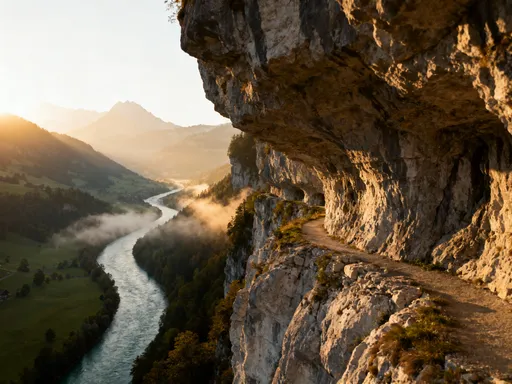
Just a short train ride from Bern, near the village of Thun, lies the Mürrenfelsen Cliff—a dramatic limestone escarpment that offers some of the most breathtaking views in the region. Rising over 1,200 meters above sea level, this cliff face is part of the transitional zone where the Swiss Plateau meets the Bernese Oberland. Unlike the more commercialized peaks of the Jungfrau region, Mürrenfelsen remains relatively undiscovered, attracting hikers and nature photographers seeking solitude and authenticity. The trail to the summit begins in the village of Merligen and winds through alpine meadows, pine forests, and rocky outcrops, gradually revealing panoramic vistas of Lake Thun, the Aare Valley, and the distant Eiger and Jungfrau.
What makes Mürrenfelsen special is not just its height, but its geological clarity. The exposed rock layers tell a story of ancient seas, tectonic collisions, and glacial sculpting. Visitors can see clear strata of limestone and marl, deposited over 150 million years ago during the Jurassic period. These layers were later uplifted and tilted by the collision of the African and European tectonic plates, creating the steep angles visible today. For those interested in earth science, the cliff is an open textbook; for others, it is simply a place of awe, where the scale of time becomes palpable. Interpretive signs along the trail explain key formations, making the experience both educational and emotionally resonant.
Safety and accessibility are well considered. The main trail is rated moderate, suitable for families and solo travelers with a reasonable level of fitness. Sturdy footwear and weather-appropriate clothing are recommended, as conditions can change quickly at elevation. The best time to visit is from late June to early October, when snow has melted and wildflowers bloom across the meadows. Along the way, hikers may encounter ibex, marmots, and golden eagles—reminders that this is a living ecosystem, not just a scenic viewpoint. By preserving trails and discouraging off-path exploration, local authorities ensure that the cliff’s fragile environment remains intact for future generations.
Traveling east from Bern into the upper Hasli Valley, the landscape grows more remote and wild. The village of Guttannen, nestled at the foot of the Susten Pass, serves as a gateway to some of the canton’s most secluded and geologically significant valleys. This area was shaped by massive glaciers during the last Ice Age, and the evidence is everywhere: U-shaped valleys, polished bedrock, and scattered boulders known as glacial erratics. Unlike the bustling tourist centers of the Jungfrau region, Guttannen remains largely untouched by mass tourism, offering a rare sense of solitude and authenticity.
The valley of Rote Gump, accessible via a well-marked trail from Guttannen, is a prime example of glacial artistry. Here, folded rock layers—some twisted at nearly 90 degrees—reveal the immense pressure exerted by ancient ice sheets. The valley floor is dotted with small lakes formed in glacial depressions, their surfaces reflecting the surrounding peaks like mirrors. During summer, alpine flowers paint the slopes in shades of purple, yellow, and red, creating a vivid contrast against the gray stone. The air is crisp, the silence profound, broken only by the occasional call of a chough or the distant rumble of a rockfall.
Accommodations in Guttannen are modest but welcoming, with family-run inns offering hearty Swiss meals and warm hospitality. The Hotel Susten, for instance, has hosted travelers for over a century and remains a hub for hikers and geology enthusiasts. Public transport is reliable, with PostBus services connecting Guttannen to Meiringen and beyond. For those seeking a deeper immersion, guided geological walks are available during the summer months, led by local experts who share stories of ice ages, mountain building, and the slow dance of tectonic plates. These tours emphasize respect for the environment, reinforcing the idea that true beauty lies not in conquest, but in quiet observation and care.
To understand Bern’s landscape is to understand the forces that shaped all of Europe. The region sits at a geological crossroads, where the stable Swiss Plateau meets the rising Alps. This boundary zone has been shaped by three major processes: the deposition of marine sediments hundreds of millions of years ago, the collision of tectonic plates that lifted these layers into mountains, and the sculpting power of glaciers during repeated ice ages. The result is a landscape of extraordinary variety—limestone cliffs, deep river gorges, alpine valleys, and glacial lakes—all within a relatively small area.
One useful analogy is to think of Bern’s terrain as nature’s sculpture studio. The raw materials—layers of limestone, sandstone, and shale—were laid down in ancient seas. The tools—tectonic pressure, ice, and water—have been at work for millions of years, chiseling, folding, and polishing the earth’s surface. What we see today is the finished piece: a landscape that is both beautiful and informative. For example, the sharp folds visible in the Hasli Valley are textbook examples of mountain-building processes, while the smooth, U-shaped valleys near Guttannen are unmistakable signatures of glacial erosion.
This geological richness directly enhances the visitor experience. Hikers don’t just walk through pretty scenery—they traverse chapters of Earth’s history. Photographers capture more than sunsets; they document the textures of time. Even casual observers, standing on a bridge or sipping coffee in a village square, are engaging with a dynamic, evolving landscape. By learning a little about the science behind the scenery, travelers gain a deeper appreciation for what they are seeing. It transforms a simple walk into a journey through deep time, where every rock has a story and every valley a memory.
Exploring Bern’s natural wonders requires preparation, but the rewards are well worth the effort. The best time to visit is from late spring to early autumn, when trails are snow-free, weather is stable, and public transportation operates on full schedule. May and June bring lush greenery and blooming alpine flowers, while September and early October offer clear skies and fewer crowds. Winter travel is possible in lower areas, but high-altitude trails are often closed due to snow and avalanche risk.
Proper footwear is essential. Hiking boots with good ankle support and grip are recommended, especially on rocky or uneven terrain. Layered clothing allows for quick adaptation to changing mountain weather—mornings can be cool, afternoons warm, and evenings chilly, even in summer. A waterproof jacket, hat, and gloves should always be in your pack. Sun protection is also important; at higher elevations, UV exposure is stronger, and snow or water can reflect sunlight, increasing the risk of sunburn.
Public transportation in the Bern region is excellent and eco-friendly. The S-Bahn connects Bern to nearby towns like Thun and Interlaken, while the PostBus network reaches remote villages like Guttannen. Most trails are accessible via train or bus, reducing the need for private cars. The Swiss Travel Pass offers unlimited travel on public transport and discounts on mountain railways, making it a cost-effective option for extended stays. Always check the SBB Mobile app for real-time schedules and service updates.
Trail safety is a priority. Stick to marked paths, which are clearly indicated with yellow signposts showing destinations and estimated walking times. Avoid unmarked routes unless accompanied by a certified guide. Inform someone of your plans, especially if hiking alone. Carry a map, water, snacks, and a basic first-aid kit. Mobile reception can be spotty in remote valleys, so downloading offline maps is advisable. Finally, check the weather forecast before heading out—sudden storms can make trails slippery and dangerous.
The beauty of Bern’s landscape is not guaranteed—it is a gift that must be protected. As more travelers seek authentic, nature-based experiences, the risk of environmental degradation increases. Foot traffic, litter, and off-trail hiking can damage fragile alpine ecosystems, erode soil, and disturb wildlife. That is why sustainable tourism is not just a recommendation; it is a responsibility. Every visitor has a role to play in preserving this natural heritage for future generations.
The simplest and most effective way to travel responsibly is to stay on designated trails. These paths are carefully planned to minimize environmental impact while providing safe access to scenic areas. Avoid picking flowers, feeding animals, or removing rocks—what may seem like a small souvenir can disrupt delicate ecological balances. Always carry out all trash, including biodegradable items like fruit peels, which decompose slowly at high altitudes and can attract pests.
Supporting local eco-initiatives also makes a difference. Many communities in the Bern region participate in conservation programs, trail maintenance, and environmental education. By choosing locally owned accommodations, eating at family-run restaurants, and purchasing regional products, travelers contribute directly to the local economy and help sustain traditional ways of life. Some inns and tour operators are certified by Swiss sustainability labels, such as the Swiss Tourism Quality label, which ensures adherence to environmental and social standards.
Ultimately, the goal is not just to see Bern’s landscape, but to honor it. When we walk quietly, leave no trace, and listen to the stories the land tells, we become part of its ongoing narrative. The cliffs, rivers, and valleys have witnessed millions of years of change; they will endure long after we are gone. But how they are remembered—intact, vibrant, and wild—depends on the choices we make today. By traveling with care and curiosity, we ensure that the next generation can stand where we stood, breathe the same crisp air, and feel the same awe at nature’s quiet, enduring masterpiece.
By Rebecca Stewart/Dec 7, 2025
By Lily Simpson/Dec 7, 2025

By Grace Cox/Dec 7, 2025
By James Moore/Dec 7, 2025

By Sarah Davis/Dec 7, 2025
By Benjamin Evans/Dec 7, 2025
By Benjamin Evans/Dec 7, 2025

By Ryan Martin/Dec 7, 2025

By Victoria Gonzalez/Dec 7, 2025
By Jessica Lee/Dec 7, 2025
By Eric Ward/Dec 7, 2025
By Daniel Scott/Dec 7, 2025
By Jessica Lee/Dec 7, 2025

By Emily Johnson/Dec 7, 2025

By Sophia Lewis/Dec 7, 2025

By Christopher Harris/Dec 7, 2025
By Benjamin Evans/Dec 7, 2025
By Laura Wilson/Dec 7, 2025
By Olivia Reed/Dec 7, 2025
By Natalie Campbell/Dec 7, 2025
