Stepping into Hua Hin feels like flipping through a living photo album of Thailand’s architectural evolution. From colonial shophouses to royal pavilions, every corner tells a story worth capturing. I never expected such visual harmony between old and new—weathered teakwood frames against pastel stucco walls, temple spires rising beside Art Deco cafes. If you're chasing beauty through your lens, Hua Hin’s streets aren’t just scenery—they’re silent storytellers waiting to be framed. This coastal gem offers more than sun and sand; it presents a layered narrative written in brick, wood, and stone, where each building is a sentence in a quiet yet powerful history. For photographers seeking depth, texture, and soul, Hua Hin is not merely a destination—it is an invitation to witness and preserve the poetry of place.
The journey to Hua Hin begins long before the camera clicks. As the train pulls away from Bangkok’s bustling Hua Lamphong Station—soon to be relocated—the landscape gradually shifts from high-rises and traffic-choked avenues to open fields, coconut groves, and glimpses of the Gulf of Thailand. This transition isn’t just geographical; it’s architectural. The built environment softens, trading glass towers for tiled roofs and corrugated iron for hand-painted signage. By the time the train glides into Hua Hin Railway Station, travelers are already immersed in a different aesthetic—one rooted in nostalgia, simplicity, and coastal charm.
Hua Hin Railway Station itself is a masterpiece of early 20th-century design, one of the oldest in Thailand and still operating with timeless grace. Built in 1911 during the reign of King Rama VI, its architecture blends traditional Thai elements with European influences. The sweeping gabled roof, painted in iconic red and white, is supported by wooden beams and flanked by symmetrical wings. Flower beds line the platform, adding bursts of color that contrast beautifully with the soft pastel walls. For photographers, this is where the visual narrative begins—not with grand monuments, but with the quiet dignity of a functional space treated as art.
The early morning light, especially between 6:30 and 8:00 a.m., bathes the station in a golden glow that enhances its warm tones and casts long, dramatic shadows. This is the ideal time to capture both the structure and the subtle activity around it: a vendor arranging grilled bananas on a cart, a family waiting patiently on wooden benches, or a monk in saffron robes walking toward the nearby temple. These candid moments, framed against the station’s orderly symmetry, add human warmth to architectural precision. Evening brings a different mood—softened by twilight and illuminated by vintage-style lanterns that echo the town’s royal past.
Leaving the station, visitors enter a town where streets unfold with intention. Unlike the chaotic grid of Bangkok, Hua Hin’s layout reflects a slower pace of life. Roads curve gently, leading toward the sea or branching into quiet residential lanes where bungalows with wide verandas sit behind flowering hedges. The urban rhythm encourages walking, observing, and photographing at eye level. This deliberate pace allows photographers to notice details often missed in faster cities: the chipped paint on a wooden door, the way sunlight filters through a canopy of frangipani trees, or the geometric pattern of iron grilles on a colonial-era window. Hua Hin does not shout its beauty—it whispers it, and those who listen are rewarded with images of rare authenticity.
No discussion of Hua Hin’s architecture is complete without acknowledging its royal heritage. Since the 1920s, when King Prajadhipok (Rama VII) first visited and fell in love with the seaside air, Hua Hin has served as a favored retreat for the Thai monarchy. This legacy is etched into the landscape, most notably in the presence of Klai Kangwon Palace, which translates to “Far From Worries.” Though the palace grounds are restricted and not open to the public for tours, its architectural influence radiates throughout the area, shaping both design and atmosphere.
Klai Kangwon and its surrounding royal residences reflect a unique fusion of Thai tradition and European modernism. Built over decades, the complex incorporates low-rise pavilions connected by covered walkways, elevated on stilts to catch sea breezes and prevent flooding. Roofs are steeply pitched with wide overhangs, a practical response to tropical rains, while decorative gables echo temple motifs. Yet, the lines are clean, the layouts symmetrical, and the materials—polished concrete, teak, and glass—speak of mid-century modern sensibility. This blend creates a visual language that is both regal and restrained, powerful yet unobtrusive.
For photographers, the challenge lies in capturing the essence of these structures without trespassing. The best approach is to focus on peripheral vantage points: public roads that offer partial views, reflections in nearby water features, or the interplay of nature and architecture. Early morning walks along Phetchakasem Road, particularly near the palace’s northern boundary, reveal glimpses of manicured hedges, ornate gates, and the silhouette of pavilions against the rising sun. These partial views often make for more compelling images than full-frontal shots, inviting viewers to imagine what lies beyond the frame.
Gardens play a crucial role in the royal aesthetic. Landscaping around the palace is meticulously maintained, with symmetrical lawns, palm-lined paths, and clusters of tropical blooms. These green spaces are not mere decoration; they are integral to the architectural experience, softening hard lines and guiding the eye through the space. Photographers can use similar principles in their compositions—framing a distant roofline with frangipani branches or using a row of coconut trees to create leading lines toward a hidden structure. The result is an image that feels both grand and intimate.
Respect is paramount when photographing royal properties. While exterior shots from public areas are generally acceptable, the use of telephoto lenses to peer into private zones is discouraged and may attract attention from security. Instead, photographers are encouraged to focus on the cultural significance of the site—how architecture serves as a vessel for national identity, continuity, and quiet dignity. In doing so, their images become not just records of form, but meditations on heritage.
Wandering through Hua Hin’s old town is like stepping into a bygone era where trade, culture, and craftsmanship converged. The heart of this historic district lies along Ruamchit Road and its adjacent alleys, where rows of Sino-Portuguese shophouses stand as enduring testaments to the town’s commercial past. These buildings, constructed primarily in the early 20th century, reflect a fascinating architectural hybrid—Chinese structural principles fused with European decorative elements, shaped by local climate and materials.
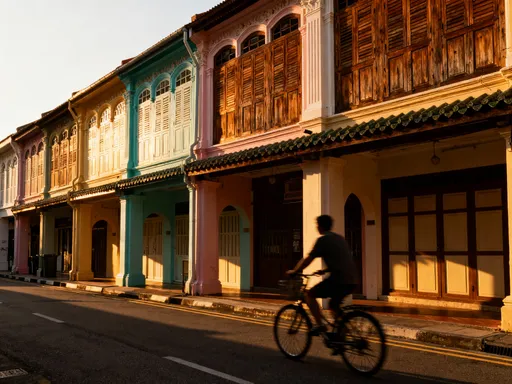
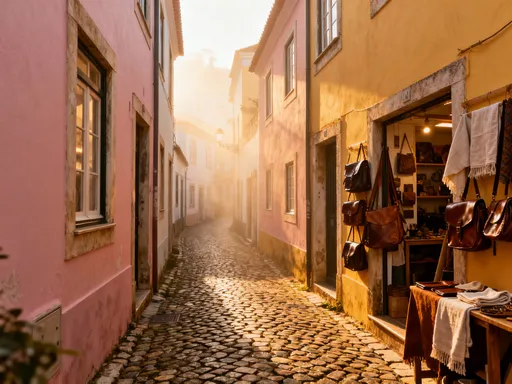
Typically two stories high, these shophouses feature narrow street frontages with deep interiors, designed to maximize space in densely built areas. The ground floors once housed family-run businesses—dry goods stores, tailor shops, and food stalls—while living quarters occupied the upper level. What makes them visually striking is their façades: pastel-colored stucco walls, often in soft pinks, mint greens, or buttery yellows, contrast with dark wooden shutters and ornate iron railings. Arched windows and doorways, influenced by Portuguese design, add rhythm and elegance, while decorative cornices and pilasters hint at a desire for refinement amid modest means.
The craftsmanship is in the details. Wooden eaves are often carved with floral or geometric patterns, and some buildings retain original tile work on their floors and staircases. Though many have been repurposed—now housing cafés, boutiques, and guesthouses—their essential character remains intact. This continuity allows photographers to capture not just static buildings, but living spaces where history and modernity coexist. A barista steaming milk behind a counter framed by century-old beams, or a cat sleeping on a windowsill beneath a faded mural, adds narrative depth to architectural form.
Golden hour—shortly after sunrise and before sunset—transforms the old town into a photographer’s dream. The low-angle sunlight enhances the texture of weathered walls, highlights the shadows in arched recesses, and warms the pastel hues to glowing intensity. Shooting from the end of a narrow alley creates a sense of depth and perspective, with receding façades drawing the eye into the distance. Using a wide-angle lens can emphasize the verticality of the buildings, while a mid-range focal length allows for tighter compositions that isolate decorative elements like door knockers, signage, or hanging lanterns.
Equally compelling are the moments of daily life that unfold within this historic setting. Elderly residents sweeping their thresholds, children chasing each other between shops, or a street vendor arranging mangoes on a cart—these scenes animate the architecture, reminding viewers that buildings are not monuments frozen in time, but backdrops to ongoing human stories. Capturing these interactions requires patience and sensitivity, but the results are images rich in both aesthetic and emotional resonance.
In a town celebrated for its beaches and royal retreats, Hua Hin’s temples offer a quieter but equally powerful architectural experience. Unlike the grand, gold-plated complexes of Bangkok, the local wats—such as Wat Nong Kae and Wat Khao Takiap—embody a more intimate relationship between faith, nature, and design. Their architecture is not meant to overwhelm, but to harmonize—to uplift the spirit without distracting from contemplation.
Wat Nong Kae, located just off the main highway, presents a serene example of provincial Thai temple design. Its ordination hall, or *ubosot*, features a multi-tiered roof with gracefully upturned eaves, a hallmark of traditional Thai architecture. The roof is clad in green ceramic tiles, a color choice that blends with the surrounding foliage. Wooden doors are intricately carved with mythological scenes, and the base of the structure is adorned with glazed tiles in floral patterns. What sets this temple apart is its stillness—the way light filters through tall trees onto the stone courtyard, or how the morning chants of monks echo softly against the hall’s walls.
For photographers, the key is to capture both the stillness and the subtle movement within it. A monk walking in saffron robes along a shaded path creates a vertical accent against horizontal lines of architecture. Prayer flags fluttering in the breeze add dynamic texture to a static composition. Early morning visits, especially between 6:00 and 7:30 a.m., offer the best light and the highest chance of witnessing rituals—alms giving, meditation, or scripture reading—without disrupting the sacred atmosphere.
Wat Khao Takiap, perched atop a small hill, offers a different kind of visual drama. The climb up 168 steps leads to a panoramic view of the coastline and a striking sight: a massive reclining Buddha stretching nearly 40 meters, its golden form gleaming under the tropical sun. The temple complex is more tourist-friendly, yet it retains spiritual significance. The architecture here is bolder—bright colors, intricate mosaics, and ornate guardian statues flanking the stairway. The contrast between the natural rock formations and the man-made structures creates compelling visual tension.
Shooting from below, looking up the staircase, emphasizes the journey and the scale of devotion. From above, the sea unfolds in the distance, creating a natural frame for the Buddha image. Long exposures can smooth out moving clouds or waves, adding a sense of timelessness. However, photographers must remain mindful of etiquette: dressing modestly, removing shoes before entering halls, and avoiding intrusive close-ups of worshippers. When done with respect, temple photography becomes an act of reverence, preserving not just form, but feeling.
The shoreline of Hua Hin tells a story of transformation—one that balances tradition and modernity in both function and form. Along the five-kilometer stretch of beach, the architectural language shifts subtly from end to end. At the southern end, near the fishing pier, weathered wooden huts stand on stilts, their roofs patched with corrugated metal, their walls bleached by salt and sun. Nets hang drying in the breeze, and small boats rest on the sand, awaiting the next tide. These structures, though humble, possess a raw aesthetic—textured, asymmetrical, and deeply rooted in local life.
Just a kilometer north, the coastline gives way to boutique resorts and beach clubs, where architecture embraces a more curated form of coastal living. These modern establishments often follow the principles of tropical contemporary design: open-plan layouts, natural ventilation, and the use of sustainable materials like bamboo, rattan, and reclaimed teak. Roofs are high-pitched to allow hot air to rise, and wide overhangs provide shade. Glass walls blur the boundary between indoors and outdoors, inviting the sea view into every space.
For photographers, this contrast offers rich visual opportunities. A single frame can juxtapose the simplicity of a fisherman’s hut with the sleek lines of a resort lounge, telling a story of economic and cultural evolution. Reflections in tidal pools or wet sand can double the impact, creating mirrored compositions that enhance symmetry and depth. Long-exposure techniques, using neutral density filters, turn crashing waves into soft mist, allowing the solid forms of buildings to stand in quiet contrast to the fluidity of nature.
The fishing pier itself is a compelling subject. Built in the 1980s, it extends nearly 200 meters into the sea and is lined with small stalls selling grilled seafood. The structure is a lattice of weathered wood and rusted metal, its irregular form shaped by decades of repair and adaptation. Shooting at sunset, when the sky turns orange and pink, transforms the pier into a silhouette against the horizon. Locals and tourists mingle here, creating dynamic scenes of interaction—children pointing at fish, couples sharing skewers, elders sipping tea. These moments, captured with a telephoto lens, add narrative warmth to the architectural decay.
Further north, luxury resorts employ landscape architecture to enhance privacy and beauty. Winding pathways, lily ponds, and coconut groves are carefully arranged to guide movement and frame views. Infinity pools seem to merge with the sea, and open-air pavilions float above the waterline. These spaces are designed for relaxation, but also for visual delight—every angle composed like a painting. Photographers can use this intentionality to their advantage, aligning horizontal lines of decks with the horizon or capturing the reflection of a palm tree in a still pool.
Architecture, no matter how beautiful, can feel lifeless without the presence of people. In Hua Hin, the relationship between buildings and their inhabitants is one of quiet harmony. Vendors set up under awnings that have sheltered generations of traders. Children play hopscotch on sidewalks shaded by overhanging eaves. Elders sit on low stools outside their homes, chatting as the day slows into evening. These everyday moments are not distractions from architectural photography—they are its soul.
Human figures provide scale, context, and emotion. A woman in a floral dress walking past a two-story shophouse instantly conveys the proportion of the building. A monk receiving alms beneath a temple portico adds ritual significance to the space. These interactions transform stone and wood into living environments, reminding viewers that architecture is not built for isolation, but for community.
Practicing ethical street photography in Hua Hin requires awareness and respect. A smile, a nod, or a simple gesture of acknowledgment can go a long way in gaining trust. In many cases, asking permission—especially when photographing children or private residences—is not just courteous, but necessary. The goal is not to capture people as props, but as partners in the story. When permission is granted, the resulting images carry a deeper authenticity, reflecting mutual respect between photographer and subject.
Candid shots, taken from a distance with a mid-telephoto lens (70–200mm), can preserve spontaneity without intrusion. Framing a scene through a window or doorway adds layers to the composition, creating a sense of looking into a private moment. Reflections in shop windows or puddles can offer abstract interpretations of street life, blending human forms with architectural lines.
Market scenes, especially at the morning fresh market on Petchkasem Road, offer a vibrant tapestry of color, movement, and texture. Stalls made of bamboo and canvas are piled high with fruits, vegetables, and fish, their arrangements almost sculptural. The interplay of light and shadow under the canopy creates dramatic contrasts, ideal for black-and-white conversions. Here, architecture is temporary and functional, yet no less worthy of documentation. These spaces, though impermanent, are vital to the town’s identity.
To photograph Hua Hin’s architecture is to engage in a dialogue between past and present, form and function, stillness and motion. Success depends not only on technical skill, but on intention. The right lens, timing, and post-processing choices can elevate a simple snapshot into a lasting visual narrative.
For wide-angle shots of buildings and streetscapes, a 16–35mm lens is ideal for capturing context and depth. However, care must be taken to avoid distortion, especially when shooting close to façades. Tilting the camera upward can exaggerate vertical lines, making buildings appear to lean inward—a technique best used sparingly and with purpose. A tilt-shift lens, if available, can correct this effect and maintain architectural integrity. For tighter details—carved woodwork, textured walls, or ornate tiles—a 50mm or 100mm macro lens brings out subtle patterns and surface qualities.
Light is the most powerful tool. Midday sun in the tropics creates harsh contrasts and blown-out highlights, making it less favorable for architectural photography. The golden hours—shortly after sunrise and before sunset—deliver soft, warm illumination that enhances colors and reveals texture. Overcast days, often dismissed by travelers, can be equally valuable, providing diffused light that minimizes glare and evens out exposure across complex façades.
Post-processing should aim to enhance, not invent. Adjusting contrast, clarity, and white balance can bring out the richness of materials without altering reality. Overuse of saturation or sharpening can make images look artificial, undermining the authenticity of the scene. Converting select photos to black and white can emphasize form, shadow, and composition, stripping away color to focus on structure and emotion.
Ultimately, the most enduring images are those that go beyond aesthetics to capture meaning. A weathered door tells of time. A child’s hand touching a temple pillar speaks of continuity. A fisherman mending his net beneath a thatched roof embodies resilience. These are not just photographs of buildings—they are records of culture, memory, and place.
Hua Hin is more than a beach town. It is a living archive of architectural evolution, where colonial shophouses stand beside royal pavilions, and fishing huts coexist with boutique resorts. Its buildings do not merely shelter—they speak. They tell stories of trade, faith, monarchy, and everyday life, woven together in a visual tapestry that is both diverse and harmonious.
For travel photographers, especially those who value authenticity over spectacle, Hua Hin offers a rare opportunity: to document a place where beauty is understated, history is visible, and culture is lived. Every shutter click becomes an act of preservation—an effort to capture not just how a building looks, but what it means.
The town invites a mindful approach. Shoot with patience. Observe with respect. Frame with intention. Let the quiet elegance of Hua Hin’s architecture guide your lens, and you may find that your photographs do more than display scenery—they carry the soul of a place, one frame at a time.
By Rebecca Stewart/Dec 7, 2025
By Lily Simpson/Dec 7, 2025

By Grace Cox/Dec 7, 2025
By James Moore/Dec 7, 2025

By Sarah Davis/Dec 7, 2025
By Benjamin Evans/Dec 7, 2025
By Benjamin Evans/Dec 7, 2025

By Ryan Martin/Dec 7, 2025

By Victoria Gonzalez/Dec 7, 2025
By Jessica Lee/Dec 7, 2025
By Eric Ward/Dec 7, 2025
By Daniel Scott/Dec 7, 2025

By Jessica Lee/Dec 7, 2025
By Emily Johnson/Dec 7, 2025

By Sophia Lewis/Dec 7, 2025

By Christopher Harris/Dec 7, 2025
By Benjamin Evans/Dec 7, 2025
By Laura Wilson/Dec 7, 2025
By Olivia Reed/Dec 7, 2025
By Natalie Campbell/Dec 7, 2025
